
Compare the layout before comparing features
Choose an opener that fits a correctly operating door and the usable space around it. An attached bedroom makes transmitted sound important; a detached building can make power, wireless range and alternate access more important. These are two parts of one equipment-selection guide.
| Layout | Main question | What should not be assumed |
|---|---|---|
| Living space above the garage | Where sound and vibration are being generated and transmitted | A new motor will eliminate roller, hinge or door noise |
| Ceiling storage or obstructed backroom | How a compatible operator and rail fit the door's travel | Every wall-mount unit suits every door |
| Detached garage | Usable power, radio control and network reach at the building | A phone app and handheld remote use the same control path |
| Overhead door is the only entry | Safe access when power or equipment is unavailable | Every opener includes backup power |
Belt-drive, overhead and wall-mounted arrangements
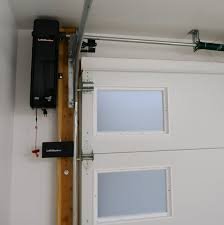
An overhead opener uses a rail above the door. A wall-mounted arrangement places the operator beside a compatible shaft/door system instead of using the same ceiling rail layout. It can address a space-planning problem, but compatibility and side clearance must be checked before it becomes a recommendation.
LiftMaster identifies belt-drive and wall-mount configurations among its quieter options. Treat that as a reason to compare the exact products, not a promise that a complete garage door will be silent. The moving door, supporting brackets and surrounding building also affect the sound you hear. Do not use a drive type as a substitute for inspecting worn hardware.
The photo documents our wall-mounted opener installation in Boulder in July 2026. Its small original image is displayed at a restrained size rather than stretched into a misleading high-resolution hero. The exact product number and measured clearances are not inferred from that image.
A detached garage needs its own access plan
Test whether the network actually reaches the equipment location if you want connected functions. A Wi-Fi signal inside the house does not establish coverage inside a separate garage. Handheld radio controls can have their own range or interference issue even when an internet connection is available.
Have electrical requirements assessed by the appropriate professional. Clarify whether wiring changes are included or outside the door installer's scope. If there is no pedestrian door, discuss the installed system's safe alternative-access provisions before an outage, rather than learning the release arrangement during a breakdown.
For opener selection and installation, tell us about ceiling obstructions, nearby rooms and the way you enter the building. Choose connected features, lighting and backup equipment only after those fundamentals have been resolved.
In an attached garage, opener selection is about more than moving the door. Bedrooms, shared walls, everyday entry and ceiling space all affect the questions to ask. Start with the existing door and the way your household uses the garage before comparing accessories.
Inspect the door before choosing a motor
Ask whether the door operates correctly as a mechanical system and whether its size, weight and track arrangement suit the proposed opener. Existing binding, worn hardware or a counterbalance problem needs its own diagnosis. A new opener should not be sold as a way to force a damaged door through its travel.
Discuss noise as a whole-system issue
Tell the installer which rooms are above or beside the garage and when the door is used. Ask about the proposed drive system, mounting arrangement and the condition of the door's moving components. A quieter motor cannot eliminate every sound made by rollers, hinges, panels or transmitted vibration.
Compare specific product documentation rather than a promise of silent operation. Have unusual new grinding or scraping investigated before treating it as normal household noise.
Choose controls around everyday access
List the remotes, wall controls and exterior access devices your household needs. Ask what is included and which existing devices are compatible. Connected features should be explained by exact model, including any network or account requirements. Do not assume every member of a product family has the same functions.
Keep normal access planning separate from a damaged-door emergency. Do not use remote operation when the opening cannot be observed safely or when the equipment is malfunctioning.
Confirm clearance and backup access
Show the installer ceiling storage, lighting, ducts and the usable doorway. Ask how the opener will fit without conflicting with door movement. If the garage is your main entry, discuss an alternative way into the home and whether the proposed model includes compatible battery backup.
For a Denver metro appointment, provide your city and explain any access restrictions. Confirm the full installed scope and final safety demonstration before choosing between quotes.
Frequently asked question
Does a quiet opener fix a noisy door?
Not necessarily. The door hardware and mounting can also contribute. Ask for a diagnosis before deciding the opener is the source.
Discuss your garage door with Bolt
Tell us your Denver metro city, the equipment you have and the issue or project you are planning. Ask about current inspection and appointment options.
Call 720-500-7199Related help and manufacturer information
Related homeowner guide · Denver metro service areas · Lakewood garage door service
LiftMaster quiet opener configurations. Use the instructions for your exact equipment; this article is not a replacement for its manual.